




Building Emotional Resilience Through Sensory Play
Building Emotional Resilience Through Sensory Play
- by Sanaa Syed

One afternoon, as I watched my little one play with a tub of rice and measuring cups, I saw something that made me pause. They had spent a good ten minutes carefully filling a cup to the brim, only for it to tip over, scattering coloured rice everywhere. Their eyebrows furrowed, I waited, unsure if this would lead to tears or a tantrum. But after a few deep breaths, they picked up the cup and started again.
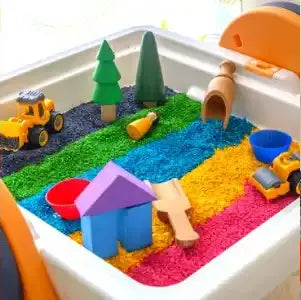
I smiled, realizing this was more than just play. It was resilience in action.
What is Emotional Resilience?
The Children's Society UK describes emotional resilience as our ability to respond to stressful or unexpected situations and crises. For children, these moments come in the form of everyday challenges, spilling a glass of milk, struggling with a tricky puzzle, or having their favourite toy taken away.
How they react to these little setbacks shapes how they’ll handle bigger challenges later in life.

Sensory play offers a beautiful, hands-on way for children to experience frustration, adaptation, and perseverance in a safe and playful environment.
How Sensory Play Builds Emotional Resilience
Imagine your child playing with a tub of dough (atta), trying to roll out a perfect circle like they see at home. It keeps tearing at the edges, sticking to their fingers. They sigh, roll it up, and try again. Without realizing it, they’re learning patience, problem-solving, and the simple but powerful lesson that mistakes aren’t the end, they’re just part of the process.
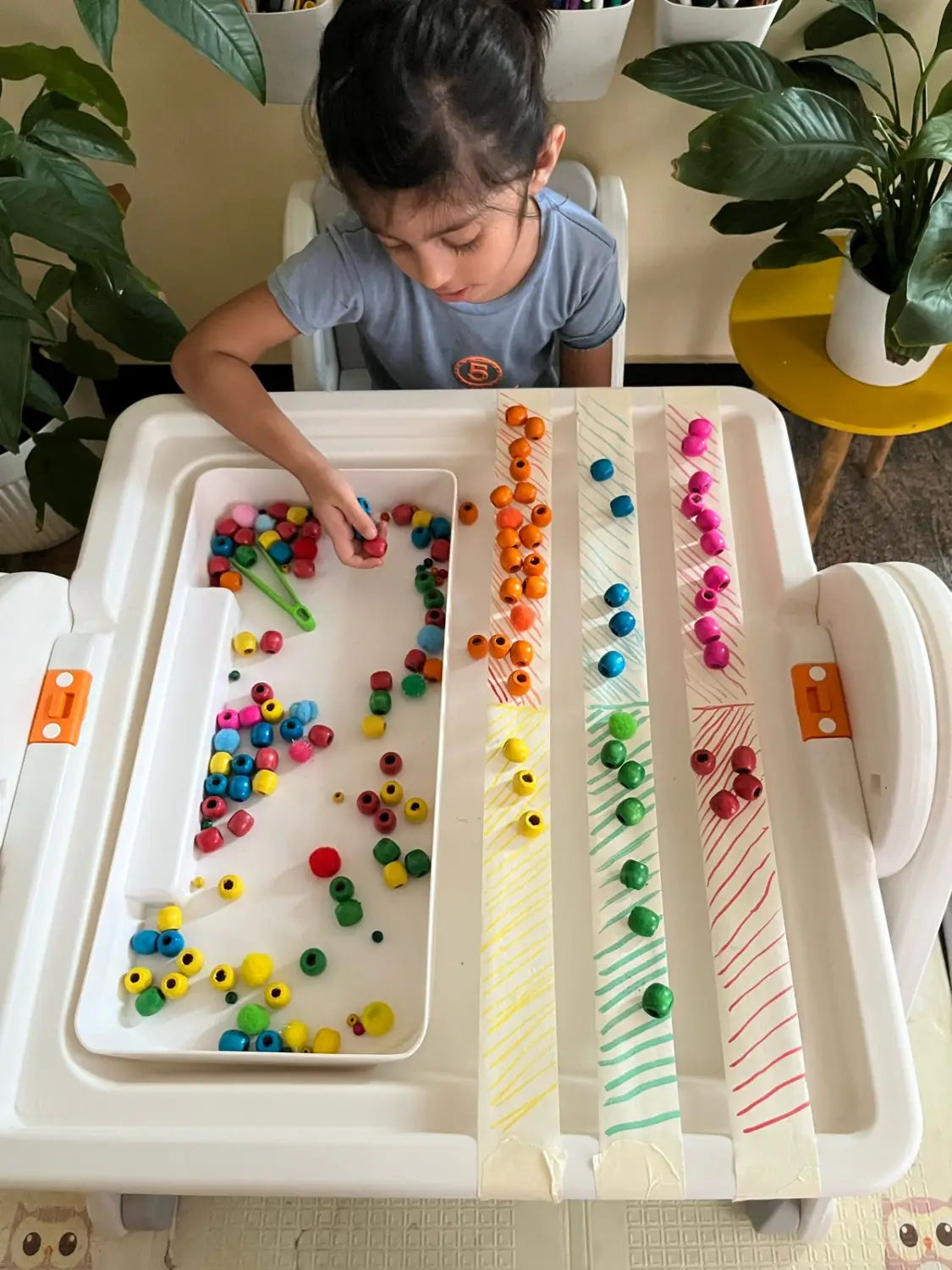
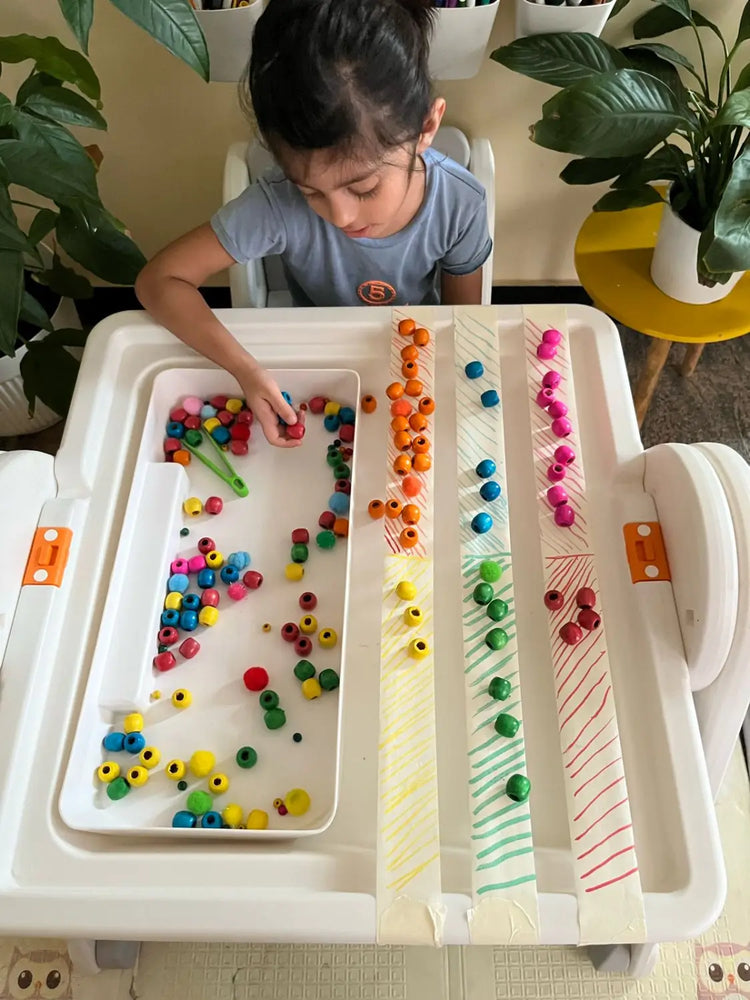
An organized setup, like with our sensory play bin filled, when with grains, dry lentils, or kinetic sand offers endless possibilities for open-ended play. Children scoop, pour, and shape, making their own rules and testing their own limits. When the sandcastle collapses or the pulses scatter across the floor, they get a chance to process frustration and try again.

T
actile tools like small scoops, tweezers, or rolling pins help develop fine motor skills while also giving children a sense of control over their actions. The simple act of transferring rainbow rice from one bowl to another with tongs may seem like a quiet activity, but it’s actually teaching patience, concentration, and resilience.
Creating a Safe Space for Emotional Growth
The environment plays a huge role in emotional resilience. A dedicated play space, whether it’s a corner with a miniture sensory table or just a mat on the balcony, gives children the freedom to experiment without fear of failure. If you’re looking for ways to create a nurturing play space at home, we’ve shared some lovely ideas in our personal spaces blog.
"When they know they have a safe place to get messy, make mistakes, and try again, they naturally develop confidence in their abilities"

Another key aspect of resilience is independence. When children engage in sensory play on their own, without constant intervention, they learn to navigate challenges and build problem-solving skills. Independent play is an essential part of emotional growth.
The Magic of Small Moments
Resilience doesn’t come from grand lessons, it’s built in everyday moments of frustration and perseverance. The next time your little one gets upset over spilled rajma beans or a broken playdough sculpture, take a step back. Watch what they do next.
"Resilience doesn’t come from grand lessons, it’s built in everyday moments of frustration and perseverance"
At that moment, they’re not just playing. They’re learning how to navigate challenges, process emotions, and try again. And that, more than anything, is what will help them face the world with confidence, one playful moment at a time!